Table of Contents
In an era where data drives every major business decision, measuring human behaviour, intelligence, and personality with scientific precision has never been more critical. The field of psychometrics is the solution to this challenge; psychometric tests help turn psychological characteristics into usable data.
Yet despite the growing adoption of psychometric testing in Indian and global workplaces, many companies unknowingly use invalid assessments to obtain unreliable results. This blog will explain the meaning of psychometric analysis, how it works, validity, the science behind its accuracy, and five critical failure points that every HR and L&D professional must understand.
What is Psychometric Analysis? Meaning and Definition
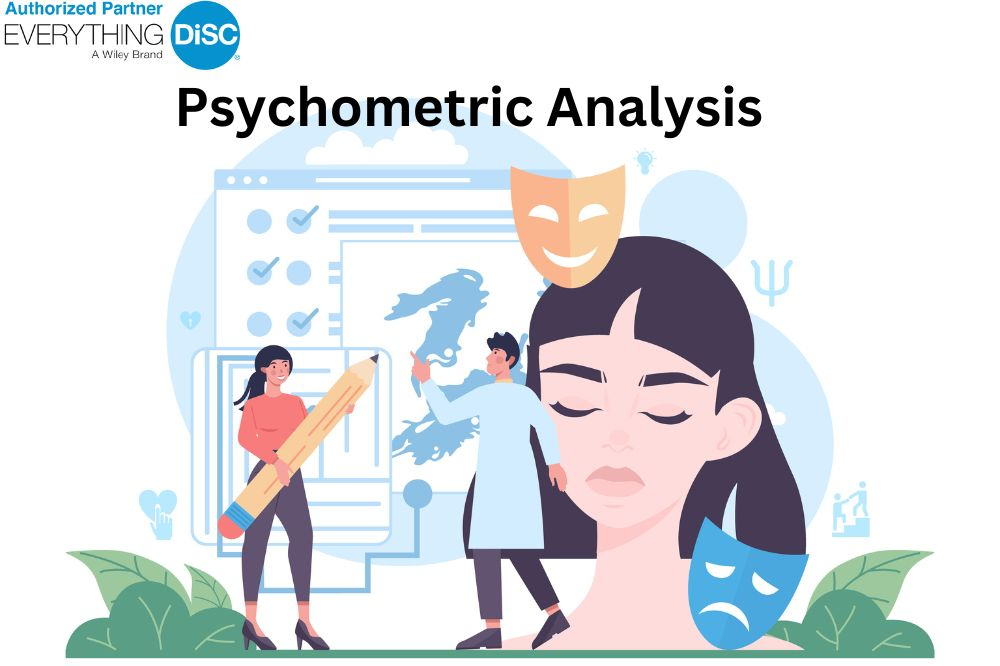
Psychometric analysis can be described as the process that involves measuring and evaluating the psychological characteristics, such as intellectual abilities, personality characteristics, aptitudes, emotional intelligence, and behavioural dispositions. The term ‘psychometric’ is an amalgamation of two Greek words: ‘psyche’, which means mind, and ‘metron’, which means measure.
The fundamental question that needs to be answered in psychometric analysis is whether we can measure the human mind accurately and consistently. The answer, when done correctly, is yes.
In the workplace context, psychometric analysis assists organisations in performing three key functions:
- Determining the compatibility of potential recruits based on personality and aptitude assessments relative to job requirements
- Knowing the working styles and motivational factors of existing staff members
- Build stronger teams by mapping behavioural dynamics across the organisation
The Difference Between Psychometric Analysis and a Psychometric Test
These terms are often used interchangeably, but there is one thing that sets them apart. A psychometric test refers to the instrument used, such as a specific form or tool. Psychometric analysis, on the other hand, refers to the process of conducting this type of research.
Here is an analogy for you to understand this better. A thermometer refers to the tool used, while clinical thermometry refers to the science. In the same sense, DiSC assessment refers to the instrument, and psychometric analysis refers to the science of validating this instrument.
How Psychometric Analysis Works: The Core Science
The scientific validity of psychometric analysis depends on two important factors: validity and reliability. A psychometric test that lacks either validity or reliability cannot be considered a scientific measurement tool.
1. Validity - Does the Test Measure What It Claims To?
Validity is the criterion that will reveal whether a psychometric assessment actually measures the psychological characteristic it is supposed to assess. Several forms of validity must be present in scientifically valid tests:
- Construct validity: Does the test adequately measure the psychological construct, such as conscientiousness or dominance?
- Content validity: Does the test include all facets of the characteristic, or does it only represent a narrow part of it?
- Predictive validity: Will the results of the test predict actual events, like performance at work or compatibility with coworkers?
- Concurrent validity: Are test results correlated with results obtained from established tests of the same construct?
51%
Predictive validity of cognitive ability tests in forecasting work performance, British Psychological Society
2. Regular Test Validation
Once you know the answer to the question- what are psychometric tests? It is vital to ensure whether your psychometric assessment tool is working as per the globally accepted norms or standards to assess its validity in test results. Regularly validating psychometric tests ensures that they continue to measure what they intend to measure accurately. The validation process involves comparing test results with actual performance data. For example, if a test is designed to measure problem-solving skills, validation may include analyzing how well the test results align with an individual’s real-world problem-solving abilities. By consistently validating tests, their credibility and accuracy can be improved over time.
3. Customization for Specific Contexts
Psychometric tests should not be one-size-fits-all. Customization is a key to enhancing credibility and accuracy. Tailoring tests to specific contexts and populations ensures that the assessments are relevant and provide accurate insights. For instance, a psychometric analysis test designed for leadership potential may need customization for different industries, as the traits of a successful leader can vary in a tech startup compared to a law firm. Customization helps the test adapt to the nuances of different settings, making it more precise.
Read More – Exploring Psychometric Testing: How It Revolutionizes Hiring and Employee Development
Make Your Psychometric Assessments Truly Reliable
Don’t let poor test design, bias, or misinterpretation lead to wrong people decisions. Leverage scientifically validated tools like Everything DiSC® to gain accurate behavioural insights, improve hiring precision, and build high-performing teams with confidence.
Explore Validated Psychometric SolutionsTypes of Psychometric Assessments Used in Analysis
The contemporary psychometric analysis involves various types of assessments, each designed to evaluate a unique dimension of human psychology:
| Assessment Type | What It Measures |
|---|---|
| Cognitive ability tests | Reasoning, numerical, verbal, and abstract problem-solving skills |
| Personality assessments | Behavioural styles, work preferences, and interpersonal tendencies |
| Aptitude tests | Potential to acquire skills relevant to a specific role or discipline |
| Emotional intelligence assessments | Self-awareness, empathy, emotional regulation, and social skills |
| Behavioural assessments (e.g. DiSC) | Observable work behaviours across Dominance, Influence, Steadiness, and Conscientiousness |
| Interest inventories | Motivational fit between a person's interests and a job's requirements |
In such an array of types, behavioural assessments such as the DiSC test have gained popularity among Indian corporations because of their relevance for use in the work environment, along with being extensively researched and validated in psychometric terms. DiSC provides a research-backed framework that maps individual behavioural priorities in a way teams and managers can directly act on.
Read More – Psychometric Assessments for Organisations: 8 Proven Benefits, ROI Data & How to Choose
5 Critical Reasons Psychometric Analysis Fails in Corporate Settings
Failure Factor 1: Poor Test Design and Construction
The foundation of any psychometric analysis is the test itself. Poorly constructed tests produce poor data, and all further decisions are going to be affected down the line.
Examples of poor test design are:
- Questions with ambiguous/double-barrelled phrasing confuse the test-takers
- Test items that do not correspond to the psychological characteristic being tested
- Tests that do not cover enough of the characteristic’s spectrum in their questions
- Lack of piloting/norming before deployment
A psychometric test is no better than its design, and businesses that employ generic off-the-peg testing without considering the validation of the instrument are especially vulnerable to this failure point.
Failure Factor 2: Cultural and Gender Bias in Test Content
Bias is one of the most insidious threats to the integrity of psychometric analysis. Tests, scenarios, or norm groups based on samples that are not representative create a systematic bias against particular populations, leading to results that measure culture or language knowledge instead of the psychological traits intended.
This is a particularly important consideration for Indian organisations, where the workforce consists of diverse linguistic and regional backgrounds, levels of education, and economic conditions. Using standardised tests developed and normed on Western English-speaking populations without localisation will substantially undermine psychometric analysis findings.
Ethical psychometric analysis involves:
- Bias audits during test development
- Customised questionnaires were needed
- Norm groups unique to India for meaningful comparison
- Continual evaluation of group differences in scores
Failure Factor 3: Unreliable or Unverified Data Sources
The validity of any psychometric analysis is contingent upon the integrity of its data. If the normative database, the reference population against which individual scores are compared, is flawed, unrepresentative, or outdated, every insight derived from the analysis is compromised.
Examples of poor data integrity include:
- Small norm groups that cannot adequately represent a statistical population
- Historical bias in the norm group data has not been identified and corrected
- Failure to update norms for demographic shifts and environmental changes
- Lack of information on the data source or validation for proprietary tests
40%
Improvement in hiring decision accuracy reported by companies using rigorously validated psychometric assessments
Failure Factor 4: Inadequate Training in Result Interpretation
Even the best scientifically developed psychometric assessment can produce damaging outcomes if the individuals responsible for interpreting its results do not have the necessary skills. Psychometric analysis is much more complicated than looking at scores in a report and making a conclusion based on that. Understanding how a test works statistically, knowing the confidence limits around each score, using appropriate cut scores, and knowing how much or how little test results actually show about someone are essential skills of an interpreter.
Some typical errors in interpreting results are:
- Treat personality types as fixed, unchangeable categories
- Base important hiring or promoting decisions on one score only
- Lack of context, failing to see how results fit into the needs of a particular job or corporate culture
- Neglecting significant discrepancies between the reported results and the actual behaviour of an individual
Companies implementing psychometric testing should be aware of the need for proper certification of interpreters. Everything DiSC, provided by BYLD Group, takes care of that by offering both tests and facilitation programs.
Failure Factor 5: Failure to Account for Dynamic Human Behaviour
The biggest philosophical problem arising out of the use of psychometric analysis is the assumption that human nature is constant. People grow, learn, and experience different situations throughout life; experiences such as changes at work, coaching, or organisational changes can play an important role in how people act and think.
The use of a psychometric assessment done under certain conditions might not represent the behaviour of the person currently, since psychometric tools do not take into account how changing circumstances affect behaviour, and what kind of information they provide could be outdated or even incorrect due to their own inherent limitations in terms of time.
It is best practice to:
- Review psychometric assessments after organisational or personal changes
- Consider psychometric data as just one part of a larger picture
- Choose psychometric assessments that take current behavioural needs into consideration
Read More – The Science Behind Psychometric Assessments: How They Work and Why They Matter
5 Practical Tips to Improve Psychometric Analysis Accuracy
Solving the above-listed problems is not simply a matter of theory. Below are five practical measures that organisations can adopt to ensure that their use of psychometric analysis produces reliable results:
- Pilot test before full deployment: Run any new psychometric tool on a sample of people from within your organisation to determine internal consistency and get feedback about the clarity of the questions.
- Select validated, reputable tools: Prioritise assessments which have undergone validation procedures, have documented norm groups, and a programme of continuous research. Tools like the Everything DiSC suite meet these standards and come with extensive independent research support.
- Train your interpreters: Invest in formal certification for HR professionals, coaches, and L&D practitioners who will use psychometric data in decisions. Certification greatly minimises risks of misinterpretation.
- Conduct regular bias reviews: Understand from your psychometric provider what kind of bias validation has been done in the development of your assessment tool. Find out if the tool is validated for the demographics within your organisation. Ask for Indian norms where applicable.
- Integrate psychometric data with other evidence: It would be unwise to base important people decisions on psychometric findings alone. Instead, combine them with other sources such as structured interviews, examples of work done, references, and actual performance.
Read More – A Complete Guide to Psychometric Tests for Recruitment & Candidate Evaluation
DiSC: A Scientifically Validated Approach to Psychometric Analysis
Everything DiSC, developed by Wiley and delivered in India by BYLD Group as the authorised partner, is an instance of what psychometric analysis at its best would look like. The Everything DiSC model covers all the problems highlighted above:
| Psychometric Requirement | How DiSC Addresses It |
|---|---|
| Construct validity | Built on decades of research into observable workplace behaviours |
| Reliability | Adaptive testing algorithm ensures consistent results across administrations |
| Bias mitigation | Culturally adapted and validated across global populations |
| Norm quality | An extensive normative database updated regularly |
| Interpretation support | Certified facilitator training programme included |
| Dynamic behaviour | Focuses on behavioural priorities in the current context, not fixed types |
DiSC theory offers a map of individuals’ behavioural characteristics based on four factors – Dominance, Influence, Steadiness, and Conscientiousness – to help improve communication, collaboration, and conflict resolution across organisations of all sizes.