Introduction
These days, managers have to deal with a world that is getting more and more complicated. They are expected to generate results, but they are also required to get people involved, keep the best workers, and make teams that are strong and operate well together. Teams made up of people from diverse generations, and shifting employee expectations, technical skills are no longer enough. Managers need to be able to adapt how they act based on how their leadership style affects different people and situations.
This is where DiSC® Management comes in handy in real life. DiSC® Management is meant to assist leaders learn how to better manage people and improve how they do it. It gives you information about behavior that you can use immediately now at work. Managers may better coach, motivate, and grow their teams if they know what their own inherent DISC management styles are and how to modify them.
The disc for managers is more than just a test for organizations that wish to improve their skills; it’s a tool for leaders. It’s crucial to know how managers use DiSC® to lead high-performing teams so that the firm can maintain doing well in the long term.
What Is DiSC® Management?
DiSC® Management is a specific way to apply the DiSC® behavioral paradigm to help managers lead and inspire people more effectively. The core DiSC® model looks at four main ways that individuals act to figure out why they act the way they do. DiSC® Management uses such insights to come up with useful strategies to manage people, hold them accountable, and improve team performance.
The core DiSC® behavioral model is the basis for DiSC® Management. It helps leaders see how their natural style affects how they give feedback, allocate tasks, settle disagreements, and make choices. It doesn’t categorize people into personality types; instead, it looks at how they act and how well they can adapt, which are two crucial qualities for managers today.
The Disc management profile is the most important feature of our system. It is a tailored study that tells managers what their leadership skills are, what their prospective blind spots are, and how to deal with people who act differently. The Disc management profile does more than just make you aware; it also gives you helpful suggestions that you can utilize in your daily work life.
Unlike regular personality tests, a disc assessment for managers looks at how to employ leadership talents in the real world. It gives managers behavior-based tactics they can implement right away in one-on-one conversations, team meetings, and chats about performance. This makes DiSC® Management a particularly effective tool for making organizations work better.
What are the DISC Management Styles
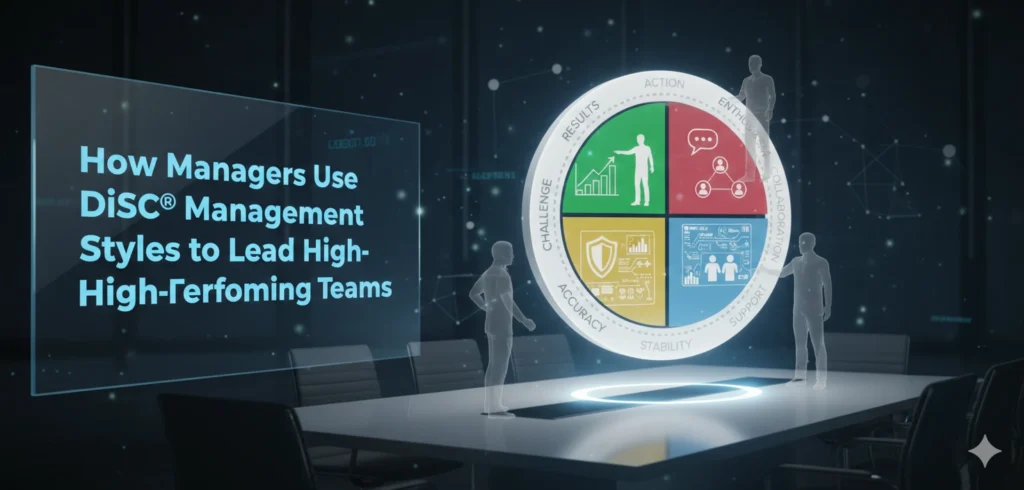
Learning about these types helps us understand how managers employ DISC management styles to change how well people work, how engaged they are, and how well teams work together.
D Style Managers—Results-Driven D-style executives desire things to get done quickly and well. They are sure of themselves, can make decisions swiftly, and really want to finish what they start. They tell teams to aim high and do their best when things get hard. But if you’re impatient, too direct, or don’t care about how others feel, you could not see things clearly. This DISC management style can help teams do well, but it needs to be toned down so that everyone is pleased.
I-Style Managers: Motivational and Persuasive I-style managers get their teams engaged and motivated. They are amazing at getting people to work together, getting people to do their best, and making the office a nice place to be. They have power because they can talk to and change other people. Two common blind spots are not following through and having problems with tough performance challenges. This DISC management style encourages individuals to get involved and work together when it is utilized effectively.
S-Style Managers: Leaders with an S-style put a lot of weight on peace and stability. They listen well and help their teams. People trust and stay loyal to them because they are consistent. But they could wait to make tough choices or try to avoid fights. When managers employ DISC management styles like S successfully, they create secure mental spaces for people.
C-Style Managers: Managers in the C-style People that are analytical and systematic are concerned about how things are made, how they fit together, and how accurate they are. They know how to use data to make decisions and plan for the future. Overthinking things or being excessively critical are two things that could be blind spots. This DISC management style makes systems stronger and makes sure that teams meet high standards.
How Managers Use DiSC® Management to Improve Team Performance
Teams that do well don’t all have to be the same; they need to be able to understand each other and adjust. This is when the DVD for managers really comes in handy. Leaders can change how they lead based on what they learn from DiSC® Management to better meet the needs of each team member.
Adaptive communication is one of the most obvious ways that managers adopt DISC management techniques. For instance, a D-style employee who is focused on outcomes may like clear, direct directions, while an S-style team member may respond better to a tone that is both helpful and comforting. You can learn more about someone and avoid misunderstandings by changing the way you talk to them.
Delegation is another area where DISC management examples may be seen in the workplace. Managers can give people who appreciate a challenge fast-paced, high-risk jobs, and they can give people who value structure and accuracy jobs that require a lot of attention to detail. People are more productive and responsible when their strengths are in line with one other.
You also get better at dealing with conflicts. Instead of getting angry, managers might employ DISC management styles to figure out why people do things. This helps people deal with stress in a more objective way.
Leaders may better motivate people with different personalities by understanding and using how managers employ DISC management styles. This leads to teams that are engaged, aligned, and focused on performance.
Benefits of the DISC Management Profile for High-Performing Teams
If you want your leaders and teams to function well together, you should learn about the DISC Management Profile. The Disc management profile is an important aspect of DiSC® Management that delivers managers meaningful, behavior-based information that directly affects how teams perform and do their duties.
One of the best things about it is that communication is clearer. Knowing their own style and the styles of their team members can help managers make their communications simpler and more successful. This helps persons who have varied speeds, priorities, or styles of talking to each other avoid misunderstandings.
Another great thing about the Disc management profile is that it makes people more accountable. When managers know how to delegate based on people’s strengths, individuals are more responsible and expectations are clearer. Teams are more likely to get things done when people’s positions match their natural tendencies.
DiSC® Management also builds trust. Team members feel valued and understood when their leaders adjust how they do things and show that they care about each person. This strengthens relationships and makes people feel safer in their minds.
In the end, the DISC Management Profile leads to increased levels of engagement. Managers that use these insights regularly make workplaces where workers feel inspired, supported, and in line with the company’s goals. This immediately improves leadership effectiveness and long-term performance.
DISC Management for Leadership Development
More firms who seek to train leaders for the long term employ DISC management as part of their planned talent development. They get promoted a lot because they accomplish their jobs well. If you want to go from being a manager to a leader, you need to know yourself, understand your feelings, and change how you act. At this point, DiSC® Management can help with planning.
DiSC® Management shows managers how their style affects how they make choices, give feedback, and get their people excited. Leaders can better control their reactions, resolve conflicts, and unite individuals from diverse roles when they possess heightened self-awareness. This helps leaders understand their own feelings better.
Everything DiSC® Management programs give you structured reports and learning pathways that are tailored to the issues that managers deal with. These will help you get there. Using DISC insights in leadership development programs gives people a consistent means to talk about problems and indicate that they are doing better.
If you think about DISC management for leadership development as an investment, it might help you prepare ready for the next leader, bring the company’s culture together, and improve performance over time.
Elevate Your Leadership with Everything DiSC®
Discover structured DISC Management programs that help managers improve communication, develop high-performing teams, and achieve measurable business results.
Explore Everything DiSC® ManagementEverything DiSC® Management: Structured Development for Managers
Through the use of organized, research-based methodologies, Everything DiSC® Management assists managers in becoming better. Managers gain practical leadership skills through the use of tried-and-true behavioral science and DiSC methodologies.
This personality test is distinct from others since it delivers managers reports for each function that deal with real problems they have to deal with, such assigning assignments, having performance reviews, encouraging people, and settling disagreements. For managers, good disc tests make sure that the answers are relevant to their daily work and valuable.
With concentrated DISC Management Training, managers may learn to see distinctions in behavior, modify how they lead, and get their teams to function better. It’s better to think, talk, and do things with your hands than to just sit around and think.
People who are on the path to become leaders can talk to each other in the same way, take responsibility for their actions, and achieve progress that can be recorded with the help of Everything DiSC® Management. As part of a plan to improve their work, supervisors will learn about DISC. It helps groups and teams accomplish their tasks better in a way that can be used on a bigger scale and continued going.
Practical DISC Management Examples in Workplace
It’s important to understand theory, but the real impact comes from putting it into practice. Here are some real-world examples of how managers use different DISC management styles to change how they manage people at work.
- Feedback Conversation:
An S-style team member may respond better to a calm, helpful conversation, while a D-style employee prefers direct, short feedback that focuses on results. Managers make sure that feedback is taken in a positive way by changing the tone and structure. - Performance Improvement Discussion:
A manager can show data, clear goals, and detailed steps for improvement to an employee with a C-style personality. When talking to an I-style employee, the focus may be on support and working together to find solutions. These differences show that DISC management styles are being used well. - Managing Diverse Team Dynamics:
Balancing dominant voices (D/I) with quieter contributors (S/C) in meetings is one of the best ways to make sure everyone is heard. This is one of the best examples of DISC management in the workplace.
FAQs: DiSC® Management and Manager Effectiveness
DiSC® Management is a framework for behavioral development that was made just for managers so they can lead, motivate, and grow their teams in the best way possible. It builds on the basic DiSC model but focuses on real-world management problems like giving feedback, delegating tasks, resolving conflicts, and having performance conversations.
When it comes to leadership, DISC management styles are the four main behavioral patterns: Dominance (D), Influence (I), Steadiness (S), and Conscientiousness (C). Each style has an effect on how managers talk to each other, make choices, set goals, and deal with stress.
The DISC Management Profile can help you communicate more clearly, delegate tasks better, hold people more accountable, reduce conflict, and get people more involved. It helps managers make sure that their leadership style fits the needs of each team member.
Adaptability determines how well managers can use DISC management styles. Leaders change how they talk to people, give feedback, and motivate them based on how they act, which leads to better teamwork and results.
Yes, the disc is especially helpful for first-time managers. It helps new managers become more self-aware early on, which helps them avoid common leadership mistakes and gain confidence in managing teams with different backgrounds.
DISC Management Training for Managers is a structured way to learn that combines information from assessments with useful tools. Programs like Everything DiSC® Management offer reports, workshops, and hands-on activities that help managers do their jobs better in the real world.