Table of Contents
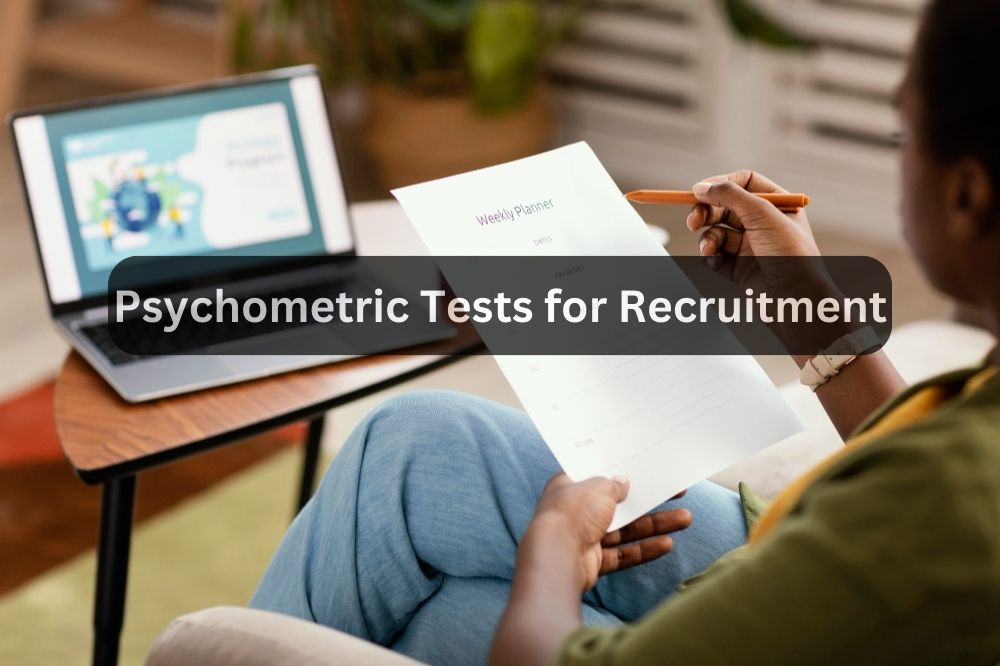
In today’s competitive job market, finding the right candidate for a role is more critical than ever. Organizations consistently look for fresh and better ways to create a workforce that is not only job-fit but also performs well in the long term. Traditional recruiting procedures often fail to fully reveal a candidate’s potential — and this is where psychometric tests for recruitment have become a revolutionary tool.
Psychometric testing for recruitment provides insights into a candidate’s cognitive abilities, personality traits, and overall suitability for a role, helping employers make more informed and strategic hiring decisions. According to the Harvard Business Review, businesses that use emotional intelligence tests for leadership development saw a 34% increase in leadership effectiveness. The British Psychological Society reports that cognitive ability assessments show 51% predictive validity in forecasting work success.
Whether you are a recruiter trying to ensure selection accuracy or a candidate looking to demonstrate your true skills, psychometric assessment is the gateway to uncovering hidden potential and driving professional achievement. This comprehensive guide covers everything — from what psychometric tests are, to their types, benefits, implementation, and best practices for candidate evaluation.
What Are Psychometric Tests for Recruitment?
Psychometric assessments are an established, scientific process that measures an individual’s behavioural tendencies, intellectual ability, personality traits, and psychological profile. In the context of recruitment, psychometric tests seek to determine the suitability of candidates for a job by evaluating how closely their cognitive capabilities and personality attributes match the requirements of the role.
Psychometric analysis is a systematic approach to assessing candidates through standardised tests designed to measure psychological attributes relevant to job performance and organisational fit. These tests provide objective, data-driven insights that complement traditional evaluation methods such as interviews and resume reviews — reducing personal bias and ensuring a fair, consistent assessment of all candidates.
When used in hiring, psychometric tools quantify a range of skills and traits: critical thinking, verbal and numerical reasoning, abstract problem-solving, emotional intelligence, communication, and time management. Employers use the data gathered to understand candidates’ work styles and behavioural tendencies — insights that are difficult to gather from an interview alone.
Why Use Psychometric Testing in Recruitment?
The importance of psychometric testing for recruitment lies in its ability to introduce objectivity and predictive accuracy into the hiring process. Here are the core reasons organisations adopt it:
1. Objective Assessment of Skills and Traits
Psychometric tests allow employers to evaluate candidates objectively, ensuring that hiring decisions are based on merit, ability, and intrinsic qualities rather than subjective judgement or unconscious bias. All candidates are measured against the same standardised criteria, creating fairness and consistency across the entire evaluation process.
2. Predicting Job Performance
Extensive research has shown a substantial link between psychometric test performance and actual job success. Cognitive ability assessments show 51% predictive validity in forecasting work performance (British Psychological Society). By evaluating cognitive talent, personality, and problem-solving ability, organisations can forecast a candidate’s likelihood of success in a specific role.
3. Enhanced Objectivity and Reduced Bias
One of the most significant benefits of psychometric analysis is the elimination of unconscious prejudice from the hiring process. Traditional methods — interviews, resume reviews — can be influenced by factors like gender, race, or educational background. Psychometric assessments provide standardised, data-driven results that reduce the impact of individual biases, promoting fairness and equity.
4. Better Predictive Validity
Psychometric analysis is known for its strong predictive validity — the ability to accurately forecast a candidate’s future job performance. Cognitive ability tests predict how well a candidate will handle complex tasks and problem-solving situations, while personality assessments predict how well they will fit the organisational culture and work environment.
5. Cultural Fit Assessment
Along with technical skills, cultural alignment is essential to building a harmonious and productive team. Psychometric tests assess a candidate’s values, work style, and interpersonal skills, helping organisations ensure that new hires align with their corporate culture — a crucial factor for employee satisfaction, retention, and team cohesion.
6. Identifying Leadership Potential
Leadership potential is not always evident on a resume. Psychometric tools evaluate behaviours such as decision-making, emotional intelligence, and communication skills to provide a more accurate picture of a candidate’s leadership capability. Companies that incorporate emotional intelligence assessments into leadership development initiatives report a 34% boost in leadership effectiveness (Harvard Business Review).
7. Time and Cost Efficiency
Traditional recruiting procedures are expensive and time-consuming. Psychometric assessment streamlines the initial screening stage, enabling recruiters to concentrate their efforts on candidates who closely match the required skills and qualities. According to Forbes, companies prioritising structured interviews and psychometric testing saw a 30% reduction in employee turnover.
Read More – Uncovering the True Power of Psychometric Assessment in Corporate Arena
Types of Psychometric Tests Used in Recruitment
Organisations must use psychometric tests that complement their company culture and the specific needs of each position. Below is a comprehensive overview of all major types of psychometric assessments used for candidate evaluation.
1. Cognitive Ability Tests
Cognitive ability tests — also known as intelligence or aptitude tests — measure various aspects of a candidate’s mental capabilities, including problem-solving skills, logical reasoning, and the ability to understand and process complex information.
Examples: Numerical reasoning tests, verbal reasoning tests, abstract thinking assessments.Use Case: Essential for roles requiring strategic thinking, analytical decision-making, and mental agility.
2. Personality Assessments
Personality tests examine a person’s preferences, interpersonal style, and behavioural characteristics. These psychometric assessments provide insights into a candidate’s potential teamwork, leadership style, and adaptability to different work situations.
Examples: Big Five Personality Traits (Openness, Conscientiousness, Extraversion, Agreeableness, Neuroticism), Myers-Briggs Type Indicator (MBTI).Use Case: Determining cultural fit and understanding how a candidate is likely to behave in various work environments.
3. Emotional Intelligence (EI) Tests
Emotional Intelligence tests evaluate a candidate’s ability to identify, understand, and manage emotions — both their own and those of others. EI plays a pivotal role in leadership effectiveness and team dynamics.
Examples: Mayer-Salovey-Caruso Emotional Intelligence Test (MSCEIT), Emotional Competence Inventory (ECI).Use Case: Critical for leadership roles, customer-facing positions, and high-collaboration environments.
4. Aptitude Tests
Aptitude tests assess specific skills or abilities relevant to the job. They measure numerical reasoning, verbal reasoning, and spatial reasoning to determine whether a candidate possesses the practical skills required for the role.
Examples: Language competency tests, numerical reasoning, spatial visualisation.Use Case: Particularly useful for roles in engineering, finance, data analysis, and design.
5. Situational Judgment Tests (SJTs)
Situational Judgment Tests present candidates with hypothetical, work-related scenarios and assess the quality of their decision-making and problem-solving responses. SJTs evaluate how candidates would manage real job challenges and navigate complex workplace situations.
Examples: Scenarios involving ethical dilemmas, conflict resolution, or challenging customer interactions.Use Case: Assessing practical problem-solving and behavioural judgment in job-specific situations.
6. Motivational Tests
Motivational tests assess what drives a candidate’s behaviour, career aspirations, and work-related values. Understanding a candidate’s motivations helps employers determine whether they will be engaged, satisfied, and committed to the role over the long term.
Examples: Assessments measuring intrinsic motivation, desire for achievement, recognition, and career progression.Use Case: Predicting long-term engagement and retention outcomes before hiring.
7. Integrity Tests
Integrity tests evaluate a candidate’s moral character, dependability, and honesty through scenario-based questions that assess responses to ethical dilemmas.
Examples: Scenario questions assessing ethical conduct under pressure.Use Case: Especially important for positions where financial responsibility and dependability are essential.
8. Behavioural Assessments
Behavioural assessments evaluate candidates’ responses to work-related situations and their demonstrated behaviour in the past. The DiSC Assessment is a widely used psychometric tool providing a comprehensive analysis of an individual’s behaviour, strengths, weaknesses, and personality types.
Examples: DiSC Assessment, assessment centre activities, behavioural interview questions.Use Case: Predicting future behaviour by analysing how candidates have historically dealt with challenges.
9. Interest Inventories
Interest inventories assess a candidate’s preferences and interests in relation to work activities and environments, helping organisations assign candidates to roles that align with their intrinsic motivation.
Examples: Strong Interest Inventory, Holland Code (RIASEC).Use Case: Matching candidates to positions that complement their interests for sustained engagement.
10. Personality and Ability Combinations
These integrated assessments combine cognitive ability and personality evaluation to provide a more complete, holistic picture of a candidate’s potential.
Examples: Hogan Assessments, Predictive Index.Use Case: Providing a comprehensive view of both cognitive and personality traits for stronger hiring decisions.
11. Job Knowledge Tests
Job knowledge tests assess a candidate’s understanding of the specific knowledge required for a particular role, particularly relevant for specialised or technical positions.
Examples: Industry-specific knowledge tests, technical expertise assessments.Use Case: Assessing competence in areas directly related to the job.
Read More – What Are Psychometric Tests? Types of Psychometric Tests & Its Importance
How Psychometric Tests Improve Hiring Decisions
Psychometric analysis improves recruitment decision-making in several key ways:
1. Objective, Data-Driven Decisions
Psychometric tests generate quantifiable data that enables recruiters to make informed, defensible hiring choices. By relying on empirical evidence, organisations enhance the objectivity of their decision-making processes and reduce the influence of personal preferences or unconscious bias.
2. Predictive Accuracy
Psychometric analysis accurately forecasts a candidate’s future job performance. Cognitive ability tests predict how well candidates will handle complex tasks; personality assessments forecast cultural fit. This leads to better hiring outcomes and improved long-term job performance.
3. Reduced Turnover
Hiring candidates who are well-matched to the role and organisational culture leads to lower turnover rates. According to Forbes, companies using structured psychometric testing saw a 30% reduction in employee turnover — a significant saving in recruitment and training costs.
4. Enhanced Job Fit
Psychometric assessments provide valuable insights into how well a candidate’s skills, personality, and motivations align with job requirements. A strong job fit leads to higher job satisfaction, better performance, and a more positive work environment for the entire team.
5. Efficient Screening
Psychometric tests streamline recruitment by quickly identifying candidates who meet essential criteria. This allows recruiters to focus on the most promising applicants, managing large candidate pools more effectively and reducing time-to-hire.
6. Consistent Evaluation Criteria
Psychometric assessments provide a uniform and standardised framework for assessing all applicants, regardless of individual recruiter preferences. This guarantees that every candidate is evaluated against the same standards, promoting fairness and transparency in the hiring process.
7. Informed Decision-Making
With comprehensive data from psychometric assessments, employers gain a thorough understanding of each candidate’s strengths, weaknesses, and overall suitability for the role. This leads to more strategic hiring and better alignment between candidates and job requirements.
Make Smarter Hiring Decisions with Psychometric Assessments
Go beyond resumes and interviews. Use data-driven psychometric insights to identify the right talent, reduce hiring bias, and build high-performing teams with confidence.
Connect with a DiSC ExpertKey Benefits of Psychometric Testing in Recruitment
1. Informed Decision-Making
Businesses gain the ability to select candidates and raise their chances of success in the role by using data to drive their hiring choices — moving away from gut instinct toward evidence-based selection.
2. Enhanced Candidate Experience
Well-designed psychometric tests facilitate a positive applicant experience. Candidates value the use of scientifically proven techniques, which demonstrate the organisation’s commitment to fair and thorough evaluation. According to an IBM survey, 61% of applicants believe that psychometric and AI-driven hiring processes improve their overall experience.
3. Tailored Training and Development
Psychometric assessment results inform not only hiring decisions but also the development of personalised training programmes for current employees, improving overall workforce competence and driving continuous growth.
4. Lower Turnover Rates
The likelihood of hiring people who are not a good fit decreases significantly when candidates are matched to roles based on their intrinsic skills, personality traits, and motivational alignment. This improves staff retention and reduces the cost of re-hiring.
5. Strategic Leadership Development
By identifying leadership potential early in the recruitment process, organisations can invest strategically in leadership development programmes, ensuring a pipeline of capable executives ready to lead the business into the future.
6. Continuous Improvement
By tracking psychometric assessment data over time, employers gain insights into the effectiveness of their recruitment procedures, enabling continuous improvement in hiring tactics and better long-term outcomes.
What Should Recruiters Look for in a Psychometric Test?
To make the best use of psychometric assessments, recruiters should look for tests that are:
- Scientifically validated and evidence-based — choose tests from reputable providers with proven reliability and validity.
- Role-relevant — different job roles require different psychological profiles; ensure the assessment matches the position.
- Culturally neutral — to ensure equitable assessment for candidates from a range of educational and cultural backgrounds.
- Complementary to other assessments — psychometric results should support and enhance the process, not replace interviews or reference checks.
- Professionally interpreted — use platforms with clear, actionable reporting or ensure qualified interpretation by trained professionals.
How to Implement Psychometric Testing in Your Recruitment Process
Successfully integrating psychometric analysis into your hiring workflow requires careful planning. Follow these steps for best results:
Step 1 — Define Objectives
Identify the specific attributes — cognitive abilities, personality traits, or job-specific skills — most relevant to the role. Clear objectives guide your selection of the right assessments.
Step 2 — Choose Reliable, Validated Tests
Select psychometric tests that are scientifically validated and proven to accurately measure the attributes you are evaluating. Prioritise tests validated for your specific industry or role type.
Step 3 — Integrate with Existing Processes
Use psychometric assessment results alongside other evaluation methods — interviews, reference checks, work samples. The goal is a holistic view of each candidate, not to replace human judgement with test scores alone.
Step 4 — Train Your Recruitment Team
Equip your hiring team with the skills to correctly interpret psychometric test results. Training should cover how to understand the data, apply it to hiring decisions, and combine it with qualitative insights from other assessment methods.
Step 5 — Maintain Confidentiality
Handle psychometric assessment data with strict confidentiality. Inform candidates about how their data will be used and protected. Restrict access to results to authorised personnel only.
Step 6 — Communicate Clearly with Candidates
Be transparent about the use of psychometric testing in your recruitment process. Provide candidates with information about the types of tests, estimated time required, and how results will be used. Clear communication builds trust and improves the candidate experience.
Step 7 — Evaluate and Continuously Improve
Regularly review the accuracy and relevance of your chosen assessments. Gather feedback from recruiters and candidates, and adjust your testing approach as needed to ensure ongoing alignment with your recruitment objectives.
Challenges of Using Psychometric Tests in Recruitment
While psychometric assessment offers significant advantages, organisations should be aware of certain limitations:
1. Possibility of Bias
Cultural, social, and educational factors can influence psychometric test performance in ways unrelated to actual job capability. Using culturally neutral, validated assessments is essential to minimise the risk of inadvertent bias or discrimination.
2. Validity and Reliability Concerns
Not all psychometric tests are scientifically validated. Poorly designed or outdated assessments can lead to inaccurate evaluations and poor hiring decisions. Always verify that your chosen tools have established reliability and validity.
3. Candidate Faking
Candidates may attempt to give socially desirable answers rather than honest ones. Well-designed psychometric assessments include built-in mechanisms to detect inconsistent or fabricated responses, minimising the effectiveness of faking strategies.
4. Over-Reliance on Test Results
Psychometric test findings should support and enhance the recruitment process — not serve as the sole determining factor. Always combine test results with interviews, reference checks, and other evaluation data for a balanced decision.
Real-World Practices and Industry Evidence
Companies like Google have made psychometric testing a pillar of their recruitment procedures, reporting 15–20% higher employee retention and satisfaction rates compared to non-tested candidates. A Society for Human Resource Management survey found that 63% of companies using psychometric tests reported a significant increase in the accuracy of candidate selection.
Deloitte used customised psychometric assessments to improve the quality of its talent pipeline by 41%. Research published in the International Journal of Selection and Assessment found that 78% of job seekers prefer to receive a detailed explanation of their assessment scores — indicating that structured, transparent feedback significantly enhances the overall candidate experience and employer brand.
These numbers illustrate that incorporating psychometric testing is not just a way to fill positions — it is a strategic investment that signals the beginning of a more data-driven era in talent acquisition.
Read More – Psychometric Analysis Meaning, Definition, and Factors
Conclusion
The integration of psychometric tests for recruitment represents a paradigm shift in talent acquisition, giving organisations a more advanced, scientific, and methodical approach to building high-performing teams. From assessing cognitive abilities and personality traits to evaluating emotional intelligence, motivational alignment, and cultural fit, psychometric analysis enables organisations to make more objective, informed, and effective hiring decisions.
A comprehensive psychometric assessment process — covering the right types of tests, properly validated and professionally interpreted — helps ensure that new hires are well-suited for their roles, leading to improved job performance, higher satisfaction, and significantly reduced turnover. As businesses navigate the challenges of hiring in an increasingly competitive landscape, psychometric testing for recruitment remains a critical and indispensable component of any strategic talent acquisition strategy.
Embracing psychometric analysis enables organisations to build stronger, more cohesive teams — and to achieve the long-term success that comes from getting the right people into the right roles from the very beginning.
FAQs Related to Psychometric Testing
Psychometric testing for recruitment involves using standardised assessments to measure psychological attributes such as cognitive abilities, personality traits, emotional intelligence, and specific skills. These tests provide objective, data-driven insights about a candidate's potential and suitability for a role, complementing traditional evaluation methods like interviews.
Interviews provide qualitative, conversational insights but are susceptible to unconscious bias and inconsistency. Psychometric analysis provides standardised, quantifiable data on cognitive ability and personality traits, making it a more objective complement to — not a replacement for — structured interviews.
Yes, when designed and administered properly, psychometric assessments are generally accurate. They are based on scientific research and validated to reliably measure specific psychological attributes. However, accuracy depends on the quality of the test and whether results are interpreted in conjunction with other evaluation methods.
While candidates may attempt to give socially desirable answers, well-crafted assessments include built-in mechanisms to detect inconsistent or contradictory responses, minimising the effect of deliberate faking.
Yes. Many testing providers offer scalable solutions tailored for small to medium enterprises. Using psychometric tests early in a company's growth can help build strong, culture-aligned teams from the outset.
Psychometric tests identify key leadership attributes — decision-making style, emotional intelligence, communication preferences — that help organisations customise leadership development programmes to meet the individual requirements of potential leaders, driving strategic growth.
Not always. While personality traits remain fairly stable over time, cognitive and skill-based scores can improve. It is advisable to re-test periodically when assessments are being used for development tracking rather than one-time hiring decisions.
Start by defining clear objectives for the role, then select scientifically validated tests from reputable providers. Integrate the assessments into your existing recruitment process, train your team to interpret the results, ensure candidate data confidentiality, and continuously evaluate and refine the process based on feedback and outcomes.