
The future of work is not just about technology, but how people experience work and this is the single most concise message that is coming out of the HR and L&D leaders across the globe as they look into the future to 2026. Although AI, automation, and digital transformation remain the major topics of strategic discussions, world studies indicate that the most serious threats to organizations are human.
Wiley research survey conducted on global Workplace Intelligence research found that HR and L&D leaders feel that the next couple of years will be characterized by expectations, rapid change and that leaders and teams will be pressured. The survey identifies five interrelated issues related to the work environment and organizations that defend against as they head into 2026.
These lessons can act as a wake-up call and guide handbook to HR and L&D leaders. Those organizations that tackle them beforehand will be in a better position to develop effective leadership competency, retain their best talents, and develop high performer cultures. Those which fail to do so might find it difficult to keep up.
The Reason Why 2026 Will be a Defining Year of the Workplace.
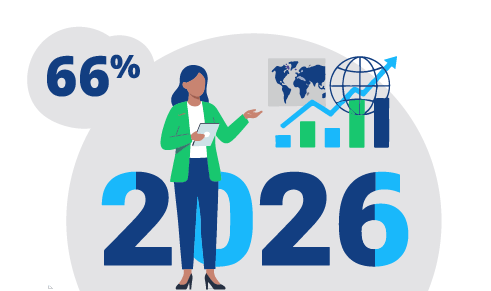
The workplace has already been radically changed and the study indicates that this trend is not yet waning. Actually, most of the survey on the Workplace Intelligence indicates that two-thirds of the surveyed believes that there will be further much more change in 2026.
This unique fact is a strong change. Change is not something that organizations can work on every now and then it has become the playing field. The structures, roles, expectations and ways of working constantly change and usually concurrently.
This leaves a burning question to the HR and L&D leaders: are the leaders fully prepared to lead people through constant turmoil?
The study proposes that there are numerous organizations that are still playing catch-up. As systems and strategies change, the leader’s ability may be playing second fiddle in building an increasing gap between what they are supposed to do and what they are willing to deal with.
The Future Workplace Issues HR and L&D Leaders Are keeping a close eye on.
According to the findings of the global Workplace Intelligence research survey, the HR and L&D leaders regularly indicate that five significant workplace challenges will define organizational success in 2026. Such difficulties are not unique; they support each other and also have an impact on culture, performance, and retention.
Challenge 1 in the Workplace: Change is Becoming the New Norm.
The universal and that is the first challenge that has been mentioned in the research is the change itself. As 66 percent of the survey participants expect further change in 2026, organizations are moving into an era of long-term disruptiveness.
Teams are supposed to adjust fast, assimilate new priorities, and be prolific without necessarily having clear ends. Change initiatives are no longer time bound as they are overlapping and continuous.
To HR and L&D leaders, however, the task can be not merely to change the situation, but to assist leaders and employees to operate in it. The ability to remain resilient, adaptable and emotionally steady turns out to be some of the necessary leadership traits when change becomes routine.
Here is the place where the leadership behavior is most important. Self-inconsistent leaders can inadvertently enhance stress, misunderstanding, or lack of engagement when in uncertain situations.
Challenge 2 in the Work Place: Leadership Expectations are Growing at a Rate Faster than Preparedness.
According to the research of the Workplace Intelligence, the expectations of the leaders are also on the increase. The leaders are currently supposed to deliver outcomes in addition to promoting well-being, interest, inclusion, and growth.
The emerging role is posing one of the most important employment issues of 2026: leadership preparedness.
A lot of leaders desire to achieve success, and fail when they are not clear about:
- Their action towards other people.
- The reasons why some teams will switch off when pressured.
- The way to adjust to various people in their leadership style.
This is one of the most important findings of the study to the HR and L&D leaders because the development of leadership cannot be limited to skills and knowledge. It should be concerned with self awareness and adaptability that assists leaders to learn their presence particularly in times of stress and transformation.

Challenge 3 at Workplace: Leadership Capability is not Proportional to the Growth of the Organizations.
The other theme to arise out of the Workplace Intelligence survey is scale. Leadership role becomes more spread in terms of roles, levels and geographies as organizations expand.
However, the ability to lead usually is not even. This poses a major challenge in the workplace: some leaders are prepared to handle complexity but they find it difficult leading to a mixed employee experience throughout the organization.
That translates to leadership development being scalable and consistent by the HR and L&D leaders. Companies have to have a common lingo surrounding leadership behavior that enables leaders of all ranks to comprehend the demands and change their style.
In the absence of such alignment, the leadership performance will be ineffective, undermining culture and performance in the long run.

Challenge 4 in the Workplace: Finding and Nurturing the appropriate talent.
Another issue that is noted in the research is the persistent difficulties about talent identification and development. Most organizations still depend on such subjective measures as visibility or confidence when determining high-potential employees.
This is still among the most enduring HR and L&D leader challenges at work.
- In the case of a misinterpretation or lack of perception of potential:
- Employees with high potential will become disengaged.
- The development activities become haphazard. Succession pipelines break. Attrition risk increases
- The insights presented in the Workplace Intelligence support the necessity to use more objective, behavior-oriented methods of talent development that will enable organizations to find and develop people in terms of their ways of work, collaboration and leadership

Challenge 5 in the Workplace: Teamwork Is on the Rise, But Integrity Is Not.
The last weakness realized in the study is based on the working of teams. Teamwork is now more significant than ever, but real cohesiveness is elusive particularly in hybrid and distance settings.
HR and L&D executives mention that even though teams can be communicating regularly, they still cannot trust each other, communicate, and align. This detachment has an impact on performance and engagement in the long-run.
It is a soft but effective challenge at the workplace. In the absence of mutual agreement on the working style and communication preferences, miscommunication is increased and the relationships are deteriorated. The skills that will be in demand in 2026 include the capacity to establish differences understanding that assists the teams to achieve more deliberate and efficient collaboration.
This is still among the most enduring HR and L&D leader challenges at work.
In the case of a misinterpretation or lack of perception of potential:
Employees with high potential will become disengaged.
The development activities become haphazard.
Succession pipelines break.
Attrition risk increases
The insights presented in the Workplace Intelligence support the necessity to use more objective, behavior-oriented methods of talent development that will enable organizations to find and develop people in terms of their ways of work, collaboration and leadership

The Implication of These Workplace Challenges on HR and L&D Leaders.
One thing that is evident in the research produced by Workplace Intelligence is that HR and L&D leaders are no longer helping business on the fringes. They play a key role in influencing the way organizations react to such challenges.
They will impact by 2026 in the following ways:
Inter-level leadership effectiveness.
Power of talent pipelines.
The individual performance and engagement between teams.
Health care retention and culture.
To overcome these challenges at work place, a change in behavior-based outcomes would be required over activity-based metrics. Behavioral insight must be the basis of leadership development, talent identification and team effectiveness.
HR and L&D executives mention that even though teams can be communicating regularly, they still cannot trust each other, communicate, and align. This detachment has an impact on performance and engagement in the long-run.
It is a soft but effective challenge at the workplace. In the absence of mutual agreement on the working style and communication preferences, miscommunication is increased and the relationships are deteriorated. The skills that will be in demand in 2026 include the capacity to establish differences understanding that assists the teams to achieve more deliberate and efficient collaboration.
This is still among the most enduring HR and L&D leader challenges at work.
In the case of a misinterpretation or lack of perception of potential:
Employees with high potential will become disengaged.
The development activities become haphazard.
Succession pipelines break.
Attrition risk increases
The insights presented in the Workplace Intelligence support the necessity to use more objective, behavior-oriented methods of talent development that will enable organizations to find and develop people in terms of their ways of work, collaboration and leadership
The Future of Leadership Behavioral Insight Matters.
In all of these five challenges, there is one thing that becomes apparent in the survey of the Workplace Intelligence: behavior matters.
Systems, strategies and skills are essential but how the day-to-day experience of leadership is achieved is dependent on behavior. Such leaders can be more adaptive, clear in their communication, and trusting when they know their dispositions.
Leader behavioral insight allows one to:
Increase self-awareness
Leadership style varies according to individuals and circumstances.
Avoid conflict more successfully.
Enhance pressure-strengthened relationships.
This base is necessary to deal with the most complicated workplace issues that will come to organizations in 2026.
Organizational Impact of Overcoming These Challenges.
The difference is felt and significant when organizations adopt a behavior-based approach to leadership and development. Based on insights that have been observed through the Workplace Intelligence research indicate that organizations experience:
Increase in critical team performance indicators.
Greater objective identification and development of the best talent.
Reduced employee turnover since they feel understood and supported.
Better, more effective, high-performance cultures.
To leaders of HRs and L&Ds, these results illustrate the commercial worth of investment in leadership skills and behavioral cognizance.
Preparing for 2026 Starts Now
The future of work is not something that is far out it is already coming to form. The Workplace Intelligence study reveals that companies have no option of holding on.
To HR and L&D leaders, the way out is:
Developing self-awareness based leadership capability.
Allowing more objective development of talent.
Enhancing team building and teamwork.
Preparing leaders on how to manage conflict.
Companies that do it now will not only successfully solve the challenges that will be facing them in the workplace in the future but will also shape up the future of work.
Increase in critical team performance indicators.
Greater objective identification and development of the best talent.
Reduced employee turnover since they feel understood and supported.
Better, more effective, high-performance cultures.
To leaders of HRs and L&Ds, these results illustrate the commercial worth of investment in leadership skills and behavioral cognizance.
Regarding Everything DiSC and Wiley Workplace Intelligence.
Everything DiSC is included in the range of Wiley professional solutions offering organizations a shared language that would enable them to create stronger teams and leadership at all levels. Wiley assists in the creation of more engaged and successful workplaces, both through team effectiveness with The Five Behaviors and talent understanding with PXT Select and the development of a leader, with The Leadership Challenge.
Wiley Workplace Intelligence aids in this work by providing extensive global research, interpreting results of employees, managers, and leaders into useful advice that it provides via research and blogs.